About WiCAS
The WiCAS events traditionally aim to inspire and motivate students and young professionals in the domain of circuits and systems to have efficient roles in their professions by meeting successful female engineers and professors and giving interesting technical and professional talks in fields of interest of CASS.
Objectives of WiCAS Events
A WiCAS event is a free initiative aiming to:
- Inspire and motivate both students and young professionals in the domain of circuits and systems to have efficient roles in their professions by meeting successful female engineers and professors.
- Enrich the audience's knowledge through interesting technical talks in fields of interest of CASS.
- Introduce the WiCAS community and its role, and motivate female researchers and scientists to be active members in conferences, events, and workshops, providing guidance and support.
More information can be obtained at: IEEE CAS Women in CAS (WiCAS)
Program
The WiCAS event at LASCAS 2026 will take place on February 25th, 2026. The event is organized by Fernanda Lima Kastensmidt, Professor at the Federal University of Rio Grande do Sul. This session will feature panelist presentations, followed by a panel discussion, and will conclude with a cocktail reception, providing an informal and welcoming environment that encourages networking and interaction among conference participants. The general schedule is below:
- 16:00 – 17:00 – Presentation of panelists and social dynamics
- 17:00 – 17:30 – Q&A
- 18:30 – 20:00 – Cocktail
The panel will bring together distinguished women engineers from both academia and industry, representing different career stages and life paths. This diversity of experiences inspired the theme of the event:
“Women in Engineering: Different Pathways to Success”WiCAS events are open and welcome everyone, including scientists, technologists, engineers, scholars, and practitioners, with no limitation on gender.
The panel presentations and subsequent discussions will focus on:
- The The panelist's career trajectories and decision-making processes.
- Practical advice on recognizing and addressing unconscious bias.
- The importance of mentoring, networking, and career ownership.
- Reflections on diversity and inclusion, highlighting their alignment with meritocracy and their role as strategic drivers of innovation and sustainable success.
WiCAS Chair
| Name | Short Bio | |
|---|---|---|
| Fernanda Kastensmidt (UFRGS, Brazil) | Fernanda Lima Kastensmidt holds a degree in Electrical Engineering from the Federal University of Rio Grande do Sul (1997), a Master's in Computer Science from the Federal University of Rio Grande do Sul (1999) and a PhD in Computer Science from the Federal University of Rio Grande do Sul (2003). Fernanda is a Full Professor at the Federal University of Rio Grande do Sul and she was Coordinator of the Graduate Program in Microelectronics (PGMICRO) for 4 years and was head of the Department of Applied Informatics for 2 years. She has experience in the area of Microelectronics and Computer Engineering, with an emphasis on Hardware, working on radiation fault protection techniques, fault-tolerant system design, programmable architecture, FPGA, and more. |  |
Panelists
| Name | Short Bio | |
|---|---|---|
| Patricia Gonzalez Guerrero (Lawrence Berkeley National Laboratory, USA) | Dr. Patricia Gonzalez-Guerrero is a Research Scientist at Lawrence Berkeley National Laboratory. Her work spans ultra-low-power digital and mixed-signal SoC/ASIC/VLSI design for conventional and non-conventional forms of processing information; Superconducting computing; Quantum readout and control; FPGAs/RISCV for exploration and evaluation of high-performance computing architectures; neuromorphic and hardware specialization through chiplets. She has three best paper awards, one best talk, two awarded patents and is currently co-leading the HPC&AI chiplets modularity workstream in the Open Compute Project. | 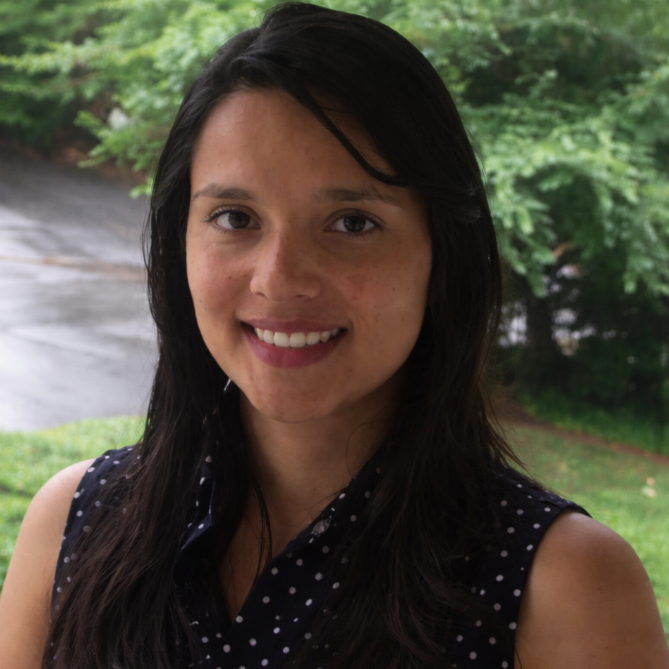 |
| Florence Podevin (Grenoble INP, France) | Florence Podevin is a Full Professor at Grenoble Institute of Technology (Grenoble INP) where she teaches and conducts research in radio-frequency and millimetre-wave integrated circuits and passive components. She holds a PhD and an HDR, and her work focuses on compact, low-loss RF/mmW passive structures and energy-efficient integrated circuit design. She has extensive academic leadership experience, significant publication and patent records, and actively contributes to RFIC research and education in international collaborations. |  |
| Lucia Akemi Miyazato Saito (Mackenzie Presbyterian Universit, Brazil) | Lucia Miyazato received the degree in electrical engineering from FEI – Faculty of Industrial Engineering (2001) and holds M.Sc and Ph.D. issued by Mackenzie Presbyterian University (2006 and 2012). She is starting a new research area at the Optics and nics Laboratory within Mackgraphe. Lucia’s work focuses on design and characterization of graphene-based modulators, fiber lasers and amplifiers, optoelectronic devices and nonlinear optical effects for the development of high-speed optical communication systems. | 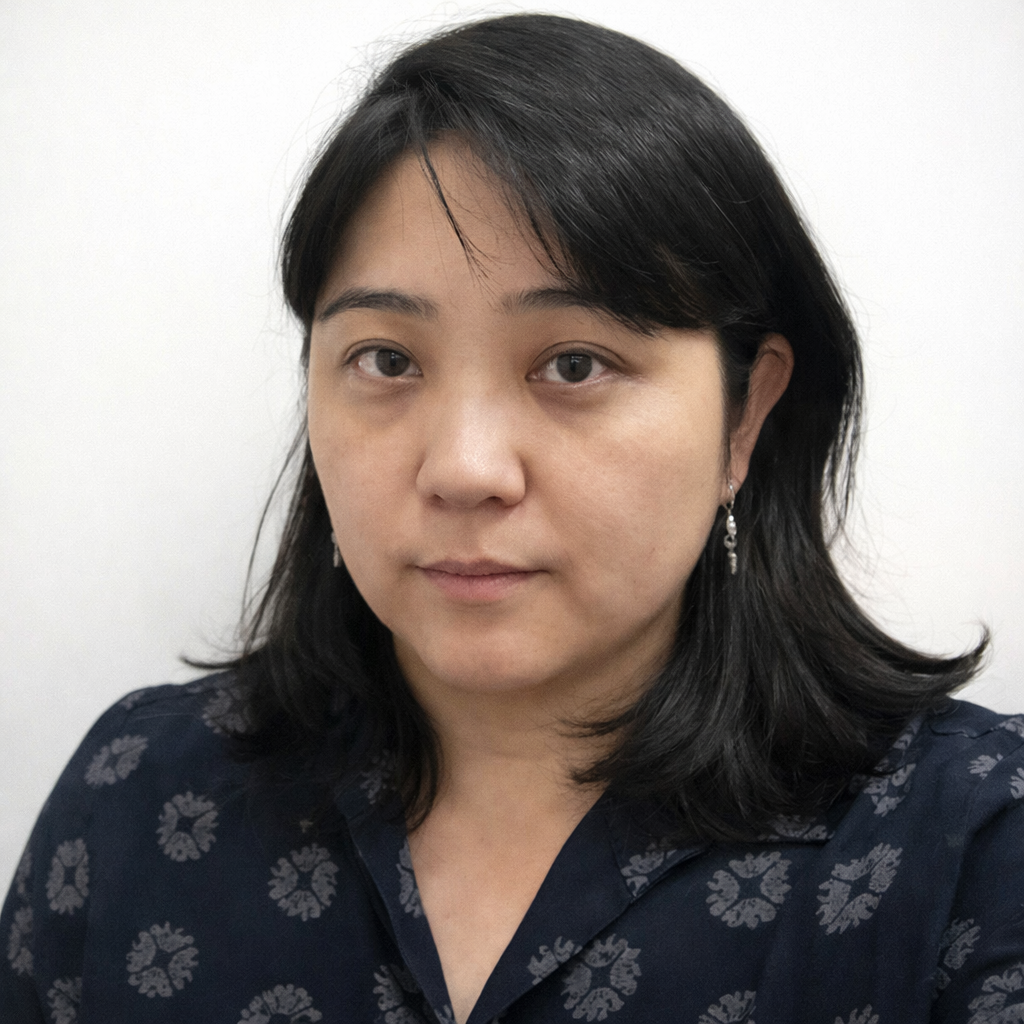 |
| Lorena Anghel (Grenoble INP, France) | Lorena Anghel is a Full Professor at Grenoble Institute of Technology (Grenoble INP) and Scientific Director for Micro-Nano-Electronics and Embedded Systems. She leads research in reliable and fault-tolerant integrated circuit and system design, including digital reliability, hardware reliability issues and neural hardware architectures. She holds an Excellence Chair at the Multidisciplinary AI Institute (MIAI) and has been involved in numerous European and national research projects, with extensive publications, leadership in IEEE/ACM conferences, and award-winning work in circuit reliability and test. |  |
About YPCAS
The YPCAS event at LASCAS 2026 will take place on February 27th, 2026. The event is organized by Mario Raffo, Professor at the the Ponthifical Catholic University of Peru and President of the IEEE Circuits and Systems Society Chapter of the IEEE Peru Section. The YPCAS session will feature panelist presentations, followed by a panel discussion, and will conclude with a cocktail reception, providing an informal and welcoming environment that encourages networking and interaction among conference participants.
The panel will bring together distinguished engineers from both academia and industry and youg proffesionals. This diversity of experiences inspired the theme of the event:Experiences and job opportunities in Circuits and Systems for young professionals.
The panel presentations and subsequent discussions will focus on:
- Job opportunities around the world.
- Situation and trends in the circuit and systems job market.
- Best practices for accessing jobs.
- The panelists' career trajectories and decision-making processes.
- Practical advice on recognizing and addressing unconscious bias.
YPCAS Chair
| Name | Short Bio | |
|---|---|---|
| Mario Raffo (PUCP, Perú) | Mario Raffo is an Associate Professor in the Department of Engineering at Pontificia Universidad Católica del Perú (PUCP), where he is involved in teaching and research in microelectronics and digital circuit design. He holds a Master of Science with a specialization in Microelectronics from the University of São Paulo and a degree in Electronic Engineering from PUCP. His expertise includes FPGA/ASIC design, hardware description and verification languages, and the use of industry tools for integrated circuit and digital system development. He also leads activities in the Microelectronics Laboratory and contributes to advancing microelectronics education and research at PUCP. | 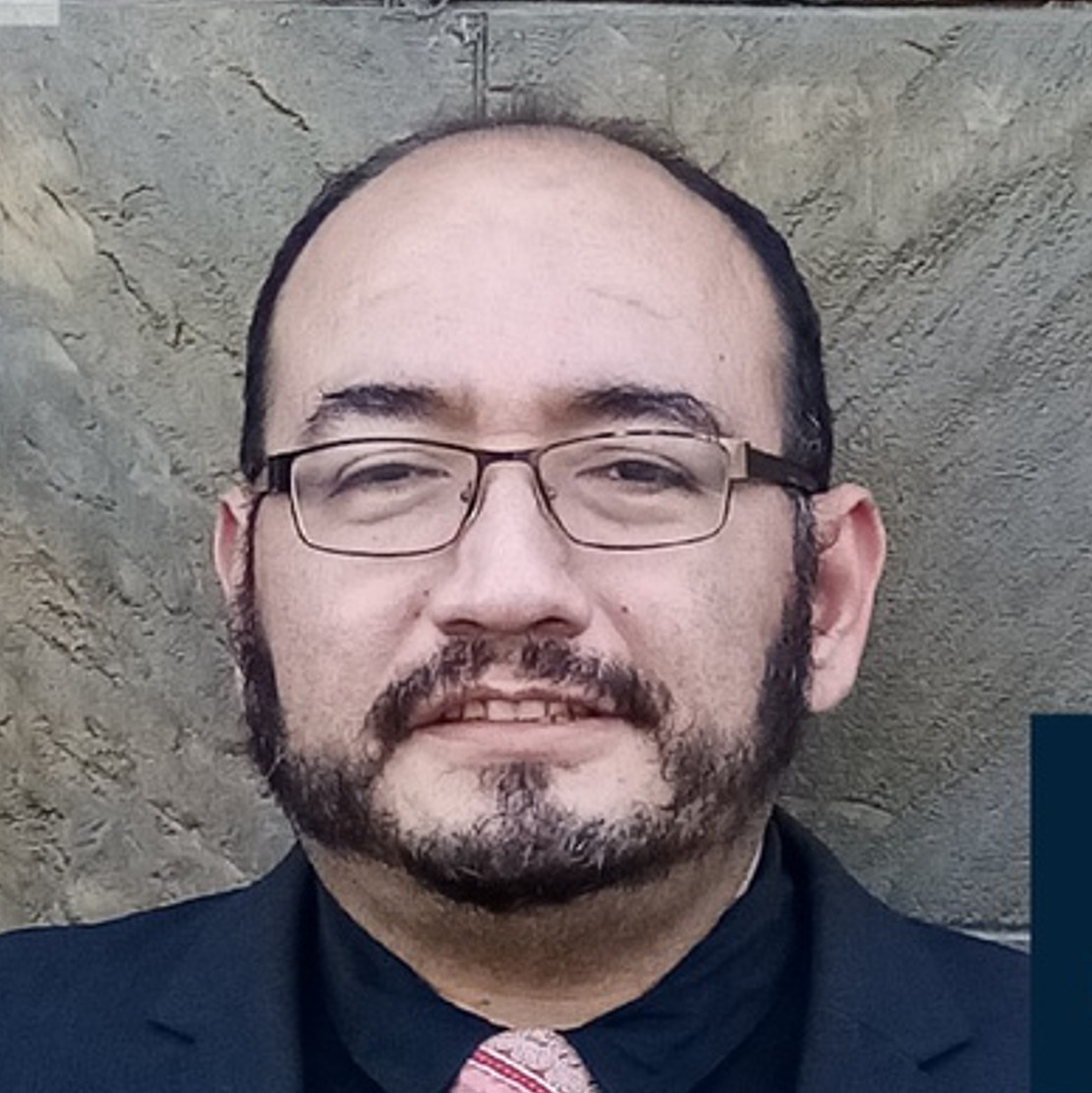 |
Panelists
| Name | Short Bio | |
|---|---|---|
| Víctor Grimblatt (Synopsys, Chile) | Victor Grimblatt holds engineering degrees in microelectronics from INPG (France) and electronics from Universidad Técnica Federico Santa María (Chile), and a Ph.D. in Electronics from the University of Bordeaux. He is the R&D Executive Director and General Manager at Synopsys Chile. His work spans Electronic Design Automation (EDA), IoT, climate change, and smart agriculture. An active IEEE leader, he has served on the IEEE CASS Board of Governors and chaired multiple international conferences and technical committees. Dr. Grimblatt has received several distinctions, including the IEEE R9 Outstanding Engineer Award and the CASS Meritorious Service Award. |  |
| Manuel Monge (OpenIC, USA) | Manuel Monge received his B.S. in Electrical Engineering (with honors) from the Pontifical Catholic University of Peru (PUCP) in 2008, and his M.S. and Ph.D. in Electrical Engineering from the California Institute of Technology (Caltech) in 2010 and 2017. He is the founder and CEO of OpenIC, an organization focused on R&D of integrated circuits using open-source EDA tools. Previously, he worked as a Lead Senior Circuit Design Engineer at Precision Neuroscience, an Assistant Professor at the University of Southern California (USC), and an ASIC Design Engineer at Neuralink. Dr. Monge has received several awards, including the 2017 Charles Wilts Prize and the Demetriades-Tsafka-Kokkalis Prize at Caltech, as well as the 2020 NIBIB/NIH Trailblazer Award for early-stage investigators. |  |
| Josie Rodriguez (Politecnico di Torino, Italy) | Josie E. Rodríguez Condia is an electronic engineer from the Universidad Pedagógica y Tecnológica de Colombia (UPTC), where he also completed his master’s degree. He obtained his Ph.D. in Computer Engineering (Cum Laude) from Politecnico di Torino in 2021. His research focuses on resilience and hardening of domain-specific accelerators, functional testing, and software-based protection techniques for GPUs and parallel architectures, as well as embedded system design. He is a member of IEEE and ACM, a researcher in the Electronic CAD group, and currently works as an Assistant Professor at Politecnico di Torino. He previously served as an adjunct professor at UPTC, teaching digital design, computer architecture, and embedded systems. He also holds two patents in applied geophysics related to accelerograph technology and geoelectric prospecting. |  |
| Jimmy Tarrillo (UFRGS, Brazil) | Jimmy Tarrillo received his Bachelor’s degree in Electronic Engineering from the Pontificia Universidad Católica del Perú in 2002 and his Ph.D. in Computer Science from the Universidade Federal do Rio Grande do Sul, Brazil in 2014. Since 2015, he has been a full-time Professor at the Universidad de Ingeniería y Tecnología (UTEC), Peru. He previously worked as a Software Engineer at Antwerp Space, Belgium, developing radiation emulation platforms on FPGAs and collaborates as a researcher with UMONS University in Belgium. Dr. Tarrillo has an extensive publication record in international conferences and journals and serves as a reviewer for scientific journals and conferences. His research focuses on fault tolerance, radiation effects in electronic systems, reconfigurable systems, and embedded machine learning. He also holds patents in technology and innovation. |  |
| Juan David Guerrero (Politecnico di Torino, Italy) | Juan-David Guerrero-Balaguera received PhD degree in Computer Engineering from Politecnico di Torino, Turin, Italy, in 2024, and he is currently a postdoctoral research fellow with the Electronic CAD Research Group in the Department of Control and Computer Engineering (DAUIN) at Politecnico di Torino, Turin, Italy. He obtained the bachelor’s and master’s degrees in electronics engineering from Universidad Pedagogica y Tecnologica de Colombia in 2013 and 2017, respectively. His research interests focus on the design of dependable hardware for safety-critical applications, reconfigurable computing, advanced digital design for FPGAs, computational arithmetic for AI, accelerators for vision applications, functional in-field testing of hardware components (e.g., CPUs, and GPUs), dependability and fault tolerance for AI accelerators, and AI reliability assessment (i.e., error modeling of hardware faults). From 2014 to 2020, he was an assistant professor at the Electronics Engineering School at Universidad Pedagogica y Tecnologica de Colombia (UPTC), teaching courses on digital design, embedded systems, computer architecture, and image processing with FPGAs. He is an IEEE member. |  |